Source.Form.Verify.Record.
The Kaldorex production framework operates in four discrete stages. Each stage produces a document that enters the lot archive. No stage can be skipped. The framework applies equally to nutritional supplements, wellness essentials and skincare formulations.
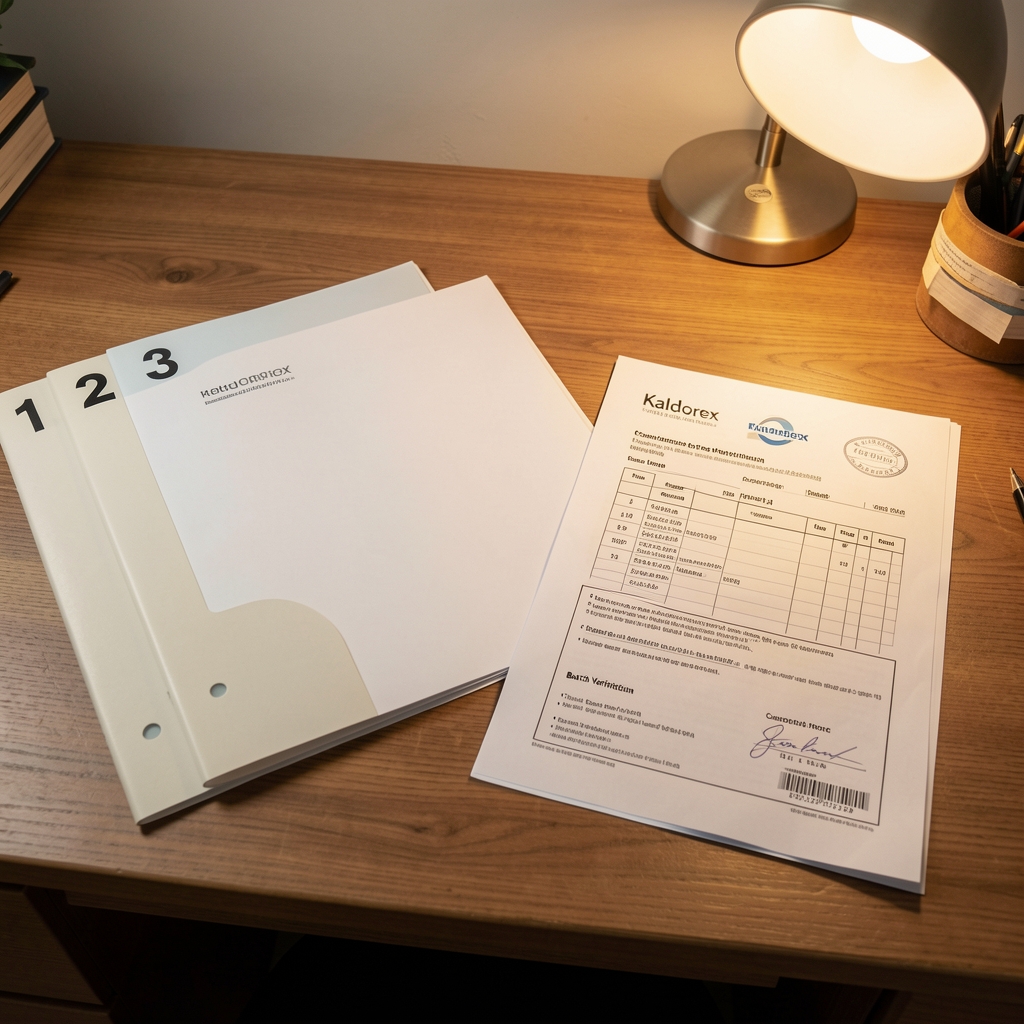
Documented Ingredient Acquisition
Every active ingredient begins with a sourcing brief. The brief specifies the ingredient form, target elemental profile, origin region and required chain-of-custody documentation. Suppliers are evaluated against this brief before any material is accepted.
Food-grade processing standards are a baseline requirement for all supplier facilities. The evaluation is documented and archived under the corresponding lot reference. Approved suppliers are reviewed annually; approvals do not carry indefinitely.

Research-Informed Composition
Serving compositions are assembled by cross-referencing published nutritional research with reference intake values. Active ingredient concentrations are mapped against elemental profiles before the composition is finalised. The process produces a composition record specifying each ingredient, its concentration and its functional role.
Skincare formulations follow the same compositional discipline. Collagen and hyaluronic acid concentrations in the anti-aging skincare range are referenced against published dermatology research, not marketing convention. Each formulation carries a separate revision history.
Independent Batch Analysis
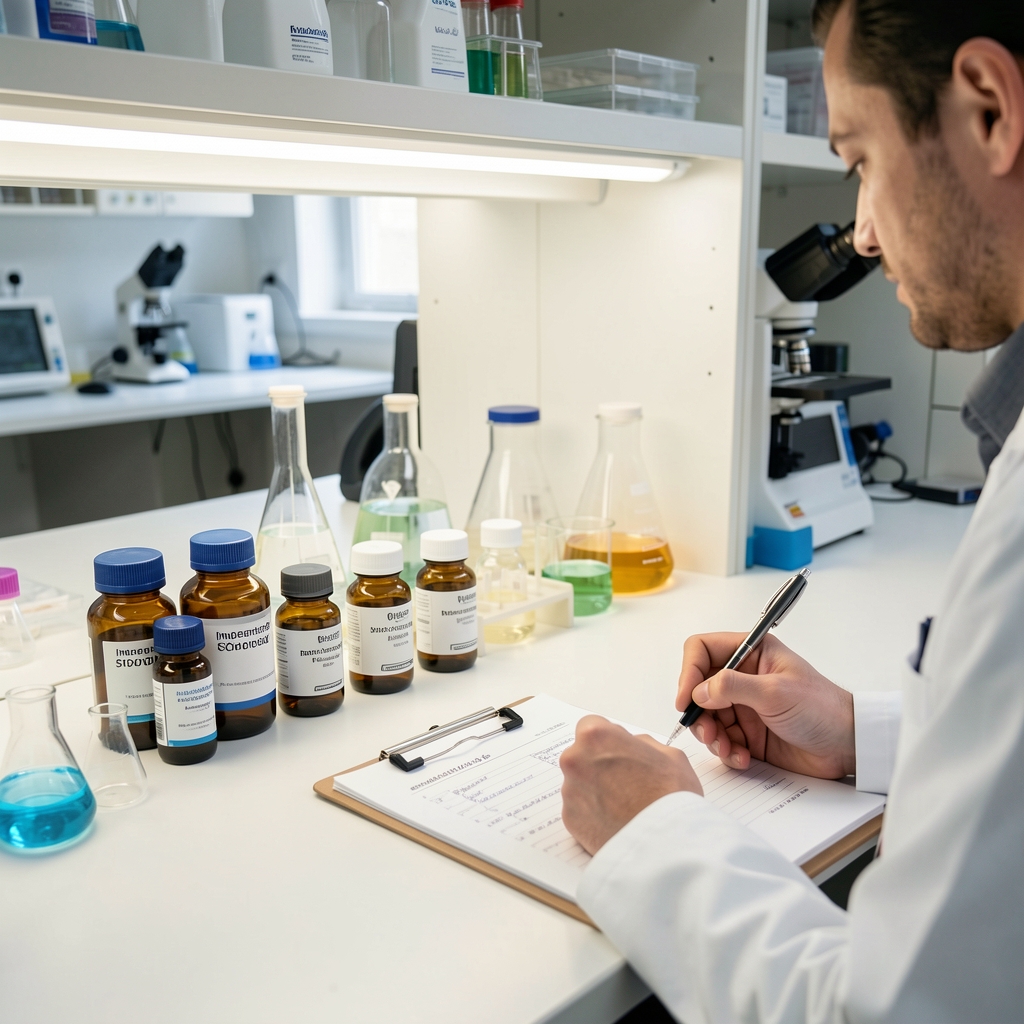
Each production lot is submitted to an independent laboratory before release. The analysis verifies ingredient concentrations against the composition record and checks labelling accuracy. Results are assessed against food-supplement compositional requirements applicable in the United Kingdom.
Ingredient profiles in Kaldorex supplements are selected based on published nutritional research and undergo independent batch verification for quality and labelling accuracy. Lots that do not meet the composition record specification are withheld. No exceptions are made.
Active ingredients are sourced from documented suppliers, with each batch accompanied by a certificate of composition. Sourcing prioritises suppliers whose facilities maintain food-grade processing standards.
Lot Record Retention
Every production lot generates a complete lot record: sourcing brief, supplier chain-of-custody document, composition record, independent verification certificate and lot release authorisation. These five documents are filed under the corresponding batch code in the archive.
Revision numbering tracks changes across production cycles. When a composition is updated — due to supplier change, ingredient reformulation or reference intake revision — the change is logged and the new revision number is applied to all subsequent lots. The prior revision remains in archive.

Regional origin and chain-of-custody are not optional.
The sourcing brief for each ingredient specifies the required region of origin. Named-region materials are preferred over undifferentiated commodity sources where the elemental profile varies meaningfully by geography. Supplier locale is documented in the sourcing brief.
Chain-of-custody documentation accompanies every ingredient consignment. Where a supplier cannot provide full chain-of-custody records, the consignment is declined regardless of cost or availability. This is the primary constraint that limits the range size.
The annual supplier review evaluates continued compliance with the sourcing brief. Suppliers whose chain-of-custody records have deteriorated are placed on probation before any discontinuation decision. The review is archived under the supplier reference number.
Named-Region Sourcing
Ingredients are sourced from documented origin regions. The supplier locale and regional provenance are recorded in the sourcing brief for every active ingredient in the range.
Chain-of-Custody Requirement
Full chain-of-custody documentation is mandatory for all ingredient deliveries. Incomplete records result in delivery rejection. No exceptions are recorded in the audit history.
Annual Supplier Review
Each approved supplier undergoes an annual review against the original sourcing brief. Continued compliance is confirmed by documentation. The review record is filed alongside the original approval in the archive.
Elemental Concentration Analysis
Each batch undergoes elemental concentration analysis against the composition record. Results are expressed as a percentage of the stated label value. Batches falling outside the acceptable range are withheld without exception.
Label vs. Composition Record
The independent laboratory cross-references the product label against the composition record. Any discrepancy — in ingredient name, concentration or unit — triggers a labelling review before the lot can proceed to release authorisation.
UK Food-Supplement Requirements
Kaldorex products are nutritional food-supplements registered with the applicable local regulatory authority under food-supplement classification. Verification scope includes compositional and labelling requirements for nutritional supplement categories applicable in the United Kingdom.
Kaldorex products are nutritional food-supplements registered with the applicable local regulatory authority under food-supplement classification. Products meet compositional and labelling requirements for nutritional supplement categories. Ingredient profiles in Kaldorex supplements are selected based on published nutritional research and undergo independent batch verification for quality and labelling accuracy. We recommend speaking with a qualified wellness or nutrition professional before introducing any supplement to your daily routine, particularly if you have specific dietary requirements.